

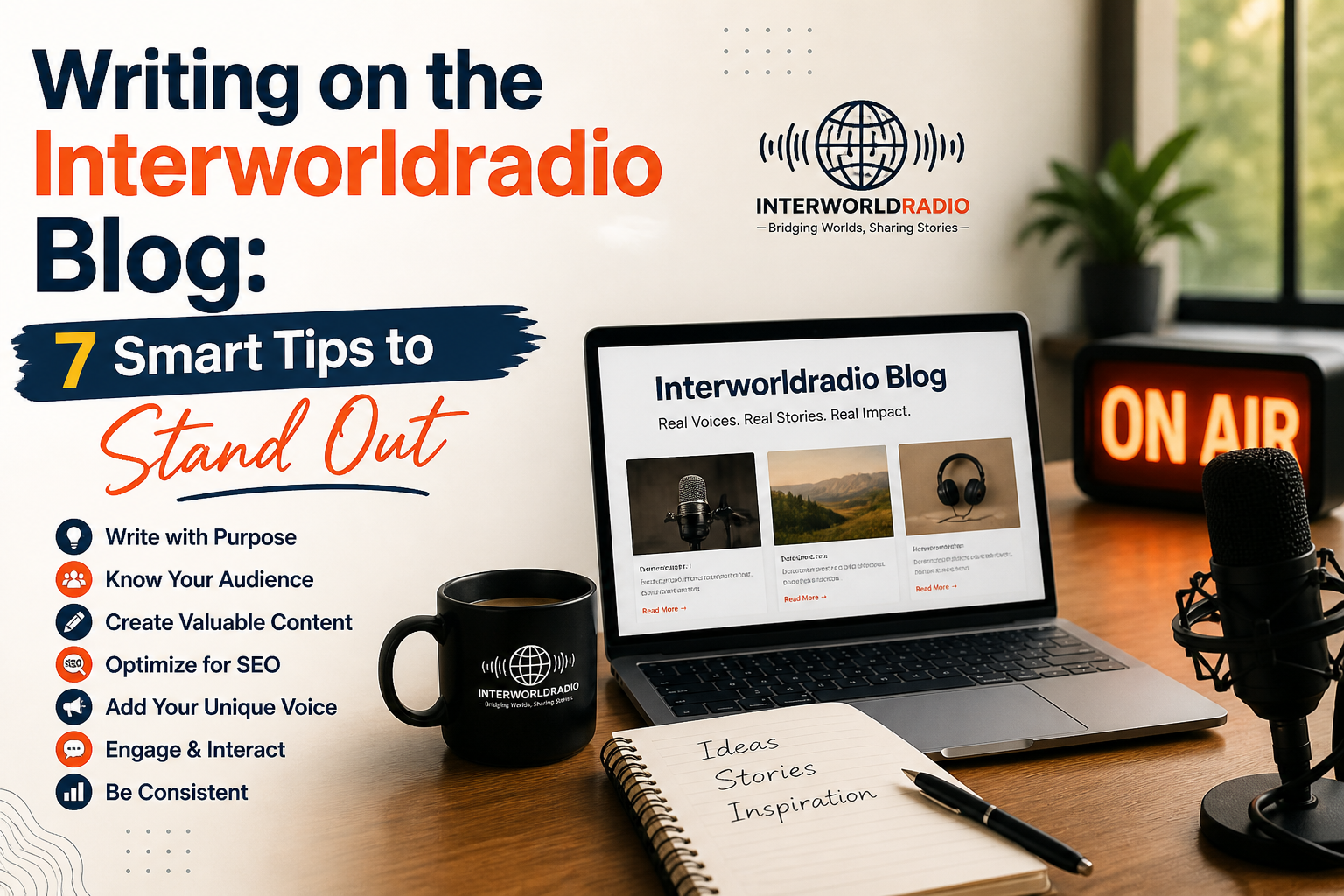
Most blogs disappear into the internet without making any impact. A few get traffic for a week and then slowly fade away. But some blogs build loyal readers because they offer something real, useful, and easy to connect with.
That is exactly why many writers are becoming interested in writing on the Interworldradio blog.
Whether you are a beginner, a student, a niche blogger, or someone trying to build authority online, this platform gives writers a chance to share meaningful content in a way that feels natural instead of robotic. The real challenge is not just writing an article. The challenge is creating content people actually want to read.
In this guide, you will learn how writing on the Interworldradio blog works, what makes articles perform better, and how to create content that attracts readers while also helping with SEO rankings.
Why Writers Are Interested in the Interworldradio Blog
The online content world is crowded. Thousands of posts are published every hour, but only a small percentage truly help readers.
The reason many creators are exploring writing on the Interworldradio blog is because readers today prefer:
- Clear explanations
- Real experiences
- Simple language
- Helpful advice
- Honest opinions
Instead of forcing complicated writing styles, successful articles now focus on clarity and practical value.
For example, a tech writer explaining podcast tools in plain English often gets more engagement than a complicated article full of difficult terms.
That shift has changed modern blogging completely.
What Makes a Blog Post Actually Worth Reading?
A successful blog post is not about using fancy vocabulary. It is about solving a reader’s problem quickly.
When writing on the Interworldradio blog, focus on these important elements:
1. A Strong Opening
The first few lines decide whether people continue reading.
Weak intro example:
“Blogging has existed for many years and many people use blogs.”
Better version:
“Most blog posts fail because they sound copied, rushed, or boring within the first 10 seconds.”
The second example creates curiosity immediately.
2. Simple Structure
Readers scan content before fully reading it.
Use:
- Short paragraphs
- H2 headings
- Bullet points
- Easy formatting
- Clear examples
This keeps readers engaged for longer.
3. Helpful Information
People remember articles that save time or teach something useful.
Instead of writing:
“SEO is important.”
Explain:
“SEO helps your article appear in search results when people search for your topic on Google.”
Specific information creates value.
The Biggest Mistakes Bloggers Make
Many writers struggle because they focus only on keywords instead of readers.
Here are some common mistakes:
Keyword Stuffing
Repeating the same phrase too many times makes content feel unnatural.
Instead of forcing “writing on the Interworldradio blog” everywhere, use related phrases like:
- content creation
- blogging platform
- online publishing
- digital writing
- article publishing
This improves readability and SEO naturally.
Copying Popular Articles
Readers can instantly notice recycled content.
Google also rewards originality.
Fresh examples, unique opinions, and real experiences matter far more than rewriting someone else’s article.
Ignoring Search Intent
If someone searches for writing on the Interworldradio blog, they usually want:
- blogging guidance
- writing tips
- SEO advice
- content ideas
- audience-building strategies
Your article should answer those needs directly.
How to Create Better Blog Content Step by Step
Creating a strong article becomes easier when you follow a process.
Step 1: Understand the Reader
Ask yourself:
- What problem are they trying to solve?
- What information do they expect?
- Are they beginners or experienced writers?
Good content always starts with understanding the audience.
Step 2: Choose One Clear Direction
Do not mix too many topics into one article.
For example, if your topic is writing on the Interworldradio blog, focus mainly on:
- writing quality
- SEO basics
- readability
- audience engagement
Keeping one direction makes the article stronger.
Step 3: Add Real-Life Situations
Real examples help readers trust the content.
Example:
A small lifestyle blogger started publishing short educational posts twice a week. Instead of chasing trends, she focused on answering specific reader questions. Within six months, her articles began receiving steady organic traffic from search engines.
That happened because the content solved real problems.
Step 4: Improve Readability
Many writers make sentences too long.
Simple writing performs better online.
Instead of:
“Content creators who desire engagement should consistently optimize readability metrics.”
Write:
“Easy-to-read content keeps visitors on your page longer.”
The second version feels more human.
SEO Tips That Actually Help Rankings
SEO does not have to feel complicated.
When writing on the Interworldradio blog, these strategies can help your article perform better:
Use the Keyword Naturally
Add the main keyword in:
- Title
- Introduction
- 2–3 headings
- Conclusion
But never force it.
Write Helpful Subheadings
Good headings improve both readability and SEO.
Examples:
- How to Write Better Online Articles
- SEO Habits Smart Bloggers Use
- Why Readers Leave Blog Posts Quickly
Focus on User Experience
Google notices how users interact with content.
If readers stay longer on the page, your article often performs better.
That is why useful information matters more than keyword repetition.
Add an Internal Link
You can naturally connect readers to another useful article.
Example:
If you want to improve your online visibility, read our SEO guide for beginner bloggers.
Internal linking improves navigation and keeps users exploring your website.
Real Examples of Smart Blog Writing
Example 1: The Tech Student
A university student started writing simple software tutorials online.
Instead of writing highly technical content, he explained tools in beginner-friendly language.
His articles gained attention because readers finally understood topics that previously felt confusing.
Example 2: The Small Business Owner
A local clothing seller began sharing short stories about customer experiences.
Rather than constantly promoting products, she focused on practical fashion advice and seasonal styling tips.
Readers returned because the content felt helpful instead of sales-focused.
Example 3: The Hobby Blogger
One writer shared weekly posts about vintage radio collections.
He included personal experiences, restoration mistakes, and lessons learned.
The blog grew slowly but built a loyal audience because it felt authentic.
These examples show an important lesson:
People connect more with useful and honest writing than perfect writing.
How to Keep Readers Interested Until the End
Getting clicks is only part of success. Keeping attention matters just as much.
Here are effective ways to improve engagement:
Use Questions Occasionally
Questions make readers think.
Example:
Have you ever clicked on an article and left within five seconds?
That instantly creates connection.
Mix Short and Medium Sentences
This creates a natural rhythm.
Very long paragraphs often feel exhausting online.
Avoid Robotic Language
Readers prefer human writing.
Avoid phrases like:
- “In today’s modern era”
- “Without further ado”
- “It is important to note”
Simple communication feels stronger.
People Also Ask
Is writing on the Interworldradio blog good for beginners?
Yes. Beginners can improve their writing skills, understand SEO basics, and build confidence by consistently publishing helpful content.
How often should I publish blog articles?
Quality matters more than quantity. Publishing one strong article weekly is usually better than posting rushed content every day.
What type of articles perform best?
Helpful guides, tutorials, opinion pieces, case studies, and practical problem-solving articles often perform well.
How long should a blog post be?
For SEO-focused content, articles between 1200 and 2000 words usually provide enough depth while remaining reader-friendly.
Can simple writing rank on Google?
Absolutely. Google prioritizes useful content that satisfies user intent. Clear writing often performs better than overly complicated language.
Building a Writing Style That Feels Authentic
Many writers try to sound “professional” by removing personality from their articles.
That usually makes content boring.
A better approach is sounding clear, honest, and confident.
For example, instead of pretending to know everything, explain experiences naturally:
“When I first started blogging, I focused too much on keywords and ignored readability. My traffic improved only after simplifying my writing.”
That feels real.
Readers trust authenticity more than perfection.
The Future of Online Blogging
Blogging continues evolving every year.
AI-generated content, search engine updates, and changing reader habits are transforming the internet quickly.
But one thing still remains true:
Useful content wins.
Whether someone is writing on the Interworldradio blog or building a personal website, long-term growth usually comes from:
- originality
- trust
- clarity
- consistency
- audience connection
Writers who focus on helping readers instead of chasing shortcuts often see better results over time.
Final Thoughts
Writing on the Interworldradio blog is not just about publishing articles online. It is about creating content people genuinely enjoy reading.
The best articles are usually simple, useful, and human.
You do not need perfect grammar or advanced vocabulary to become a better blogger. What matters most is understanding your audience, solving real problems, and communicating clearly.
Start small. Improve with every article. Test different styles. Learn what readers respond to.
Over time, strong writing habits can help you build authority, increase traffic,
