

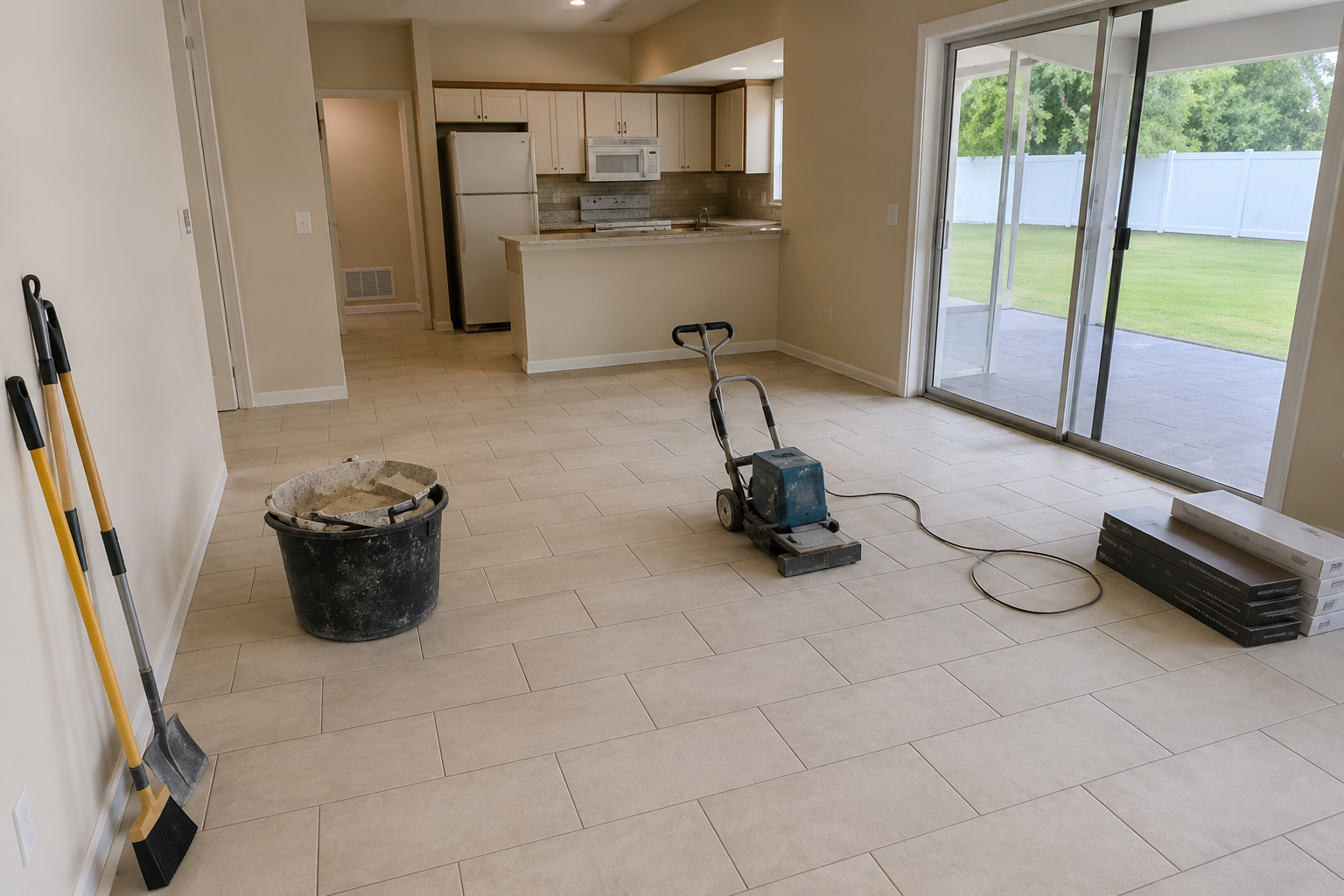
Many homeowners focus on choosing the perfect flooring material. They compare tile, luxury vinyl plank, laminate, and hardwood, spend hours looking at colors and styles, and carefully plan the appearance of the finished space.
What many people don’t realize is that the long-term performance of a new floor often depends less on the flooring product itself and more on what happens before installation begins.
In Tampa homes, one of the most important steps in the entire process is proper floor removal.
Old tile, adhesive residue, damaged flooring materials, moisture issues, and uneven concrete can all affect how a new floor performs. When these problems are ignored or covered up, even high-quality flooring materials can develop issues over time.
A successful flooring project starts with understanding what is happening underneath the existing floor.
What Many Homeowners Don’t Realize About Flooring Projects
When homeowners walk through their house, they only see the finished surface.
What they don’t see is the concrete slab, subfloor, old adhesive, thinset residue, previous repairs, moisture damage, and other hidden conditions beneath the flooring.
In many Tampa homes, flooring materials have been replaced multiple times over the years. A tile floor may have been installed over an older surface. Vinyl may have been placed over existing flooring. Various repairs may have been performed by previous owners.
By the time a homeowner decides to install new flooring, there may be several layers of hidden issues underneath.
This is one reason professional flooring projects typically begin with a complete evaluation of the existing floor before new materials are installed.
Why Old Flooring Often Hides Bigger Problems
Floor removal frequently reveals conditions that were impossible to see beforehand.
What appears to be a simple flooring replacement can uncover cracked concrete, moisture damage, uneven surfaces, loose tile sections, deteriorated underlayment, or old adhesive buildup.
In Florida homes, moisture is often one of the biggest concerns.
Because Tampa experiences high humidity levels throughout much of the year, moisture can affect both concrete slabs and flooring systems over time. In some situations, homeowners may not notice a problem until the existing flooring is removed.
The sooner these issues are identified, the easier they are to address before new flooring is installed.
Common Problems Found After Tile Removal
Tile removal is one of the most common demolition services performed in Tampa homes.
Once the tile is removed, contractors often discover conditions that need attention before the next flooring system can be installed.
Some of the most common findings include:
Cracks in the concrete slab.
Uneven areas throughout the floor.
Old thinset buildup.
Adhesive residue from previous flooring.
Minor moisture-related staining.
Surface contamination that can interfere with bonding.
Previous patchwork repairs have failed over time.
None of these problems automatically means a project is in trouble. However, they do need to be addressed properly before installation moves forward.
Ignoring these conditions simply transfers the problem to the new floor.
Why Thinset Removal Is So Important
After tile demolition, one of the most important steps is dealing with the remaining thinset.
Many homeowners are surprised by how much material remains attached to the concrete after the tile itself has been removed.
Even small ridges and high spots can create problems for future flooring installations.
Luxury vinyl plank flooring, laminate flooring, hardwood flooring, and large-format tile all perform best when installed over a properly prepared surface.
If the floor contains excessive thinset buildup, the finished result may look uneven, feel unstable, or develop performance issues later.
Proper preparation helps create a smoother and more consistent foundation for whatever flooring material is selected next.
How Florida Humidity Affects Flooring Projects
Florida presents challenges that homeowners in many other states never experience.
Humidity, temperature changes, and moisture movement through concrete slabs can all influence flooring performance.
This does not mean that flooring cannot perform well in Tampa. In fact, modern flooring products perform exceptionally well when installed correctly.
The key is identifying potential moisture concerns before installation begins rather than after problems appear.
During demolition and floor preparation, contractors have an opportunity to evaluate the slab and determine whether additional preparation may be beneficial.
In some situations, moisture mitigation products or surface preparation methods may be recommended depending on the flooring material being installed.
The Connection Between Floor Removal and Flooring Performance
Many flooring failures are blamed on the flooring product itself.
In reality, the underlying surface is often responsible.
When a floor is not properly prepared, problems may develop that have nothing to do with the quality of the flooring material.
These can include:
Movement underfoot.
Hollow-sounding tile.
Separated grout lines.
Visible lippage.
Loose flooring sections.
Premature wear.
Adhesive failure.
Uneven finished surfaces.
Proper demolition and preparation help reduce the likelihood of these issues by creating a better foundation before installation begins.
For homeowners planning a renovation, working with a floor removal contractor in Tampa can help identify hidden conditions before they affect the new flooring system.
Why Luxury Vinyl Plank Flooring Depends on Proper Preparation
Luxury vinyl plank flooring continues to be one of the most popular flooring options throughout Tampa Bay.
Homeowners appreciate its appearance, durability, and resistance to everyday wear.
However, LVP flooring is highly dependent on the condition of the surface underneath.
Even small imperfections in the slab can sometimes telegraph through the finished floor.
Low spots, high spots, leftover adhesive, or thinset residue can all affect performance.
This is why demolition and preparation are often just as important as the installation itself.
A beautiful LVP floor starts long before the first plank is installed.
Why Tile Floors Sometimes Crack After Installation
One of the most common questions homeowners ask is why tile floors crack.
In many cases, the tile is not actually the root cause of the problem.
Tile is extremely durable when installed over a stable and properly prepared surface.
Cracks often occur when movement develops underneath the tile.
This movement may be caused by slab issues, inadequate preparation, moisture-related conditions, or other substrate concerns.
Professional tile installers Tampa homeowners trust typically spend significant time evaluating and preparing the surface before tile installation begins.
That preparation process plays a major role in long-term performance.
The Importance of Floor Preparation Before Tile Installation
Tile is one of the most durable flooring materials available, but it is also one of the least forgiving.
Unlike some floating flooring systems, tile does not easily hide imperfections underneath.
Any issues present in the substrate may eventually affect the finished installation.
This is one reason experienced contractors place such a strong emphasis on floor preparation.
Before beginning tile installation, Tampa homeowners often expect to see only the finished product. However, much of the work that determines the success of the project happens before the first tile is ever set.
Surface preparation, crack evaluation, floor flattening, moisture assessment, and proper substrate preparation all contribute to a more successful installation.
Hardwood Flooring Requires a Stable Foundation
Hardwood flooring remains a popular choice for many Tampa homeowners seeking a timeless appearance.
Whether using engineered hardwood or traditional wood flooring, the condition of the substrate remains extremely important.
Uneven surfaces can create movement and stress within the flooring system.
Moisture concerns can also affect performance over time.
For this reason, professional flooring projects often include careful evaluation of the existing surface before installation begins.
The goal is to create the best possible conditions for long-term durability.
Why Floor Leveling Is Often Necessary After Demolition
Demolition frequently exposes uneven areas that were hidden beneath the existing flooring.
In some homes, these variations are minor.
In others, they may be significant enough to affect installation quality.
Floor leveling helps create a flatter and more consistent surface for the new flooring system.
This process can be especially important when installing large-format tile, luxury vinyl plank flooring, and certain hardwood flooring products.
Many homeowners don’t realize how much preparation work may be required until demolition is complete and the slab becomes visible.
Trying to Save Money on Demolition Can Become Expensive Later
Understandably, homeowners look for ways to reduce project costs.
However, cutting corners during demolition and preparation often creates more expensive problems later.
Installing new flooring over an improperly prepared surface may lead to repairs, replacement costs, or shortened flooring lifespan.
When problems develop, correcting them often requires removing portions of the new floor and addressing the underlying issue anyway.
In many situations, investing in proper preparation from the beginning is the more cost-effective decision.
Final Thoughts
New flooring can completely transform the appearance of a home, but the finished result depends heavily on what happens before installation begins.
Proper floor removal allows hidden problems to be identified, evaluated, and corrected before they affect the new flooring system. Old adhesive, thinset buildup, uneven concrete, moisture concerns, and surface imperfections are all easier to address during demolition than after a new floor has been installed.
Whether you’re planning tile, hardwood, laminate, or luxury vinyl plank flooring, preparation remains one of the most important parts of the project.
Homeowners throughout Tampa who understand the value of proper demolition and preparation are often rewarded with flooring systems that look better, perform better, and last longer.
