

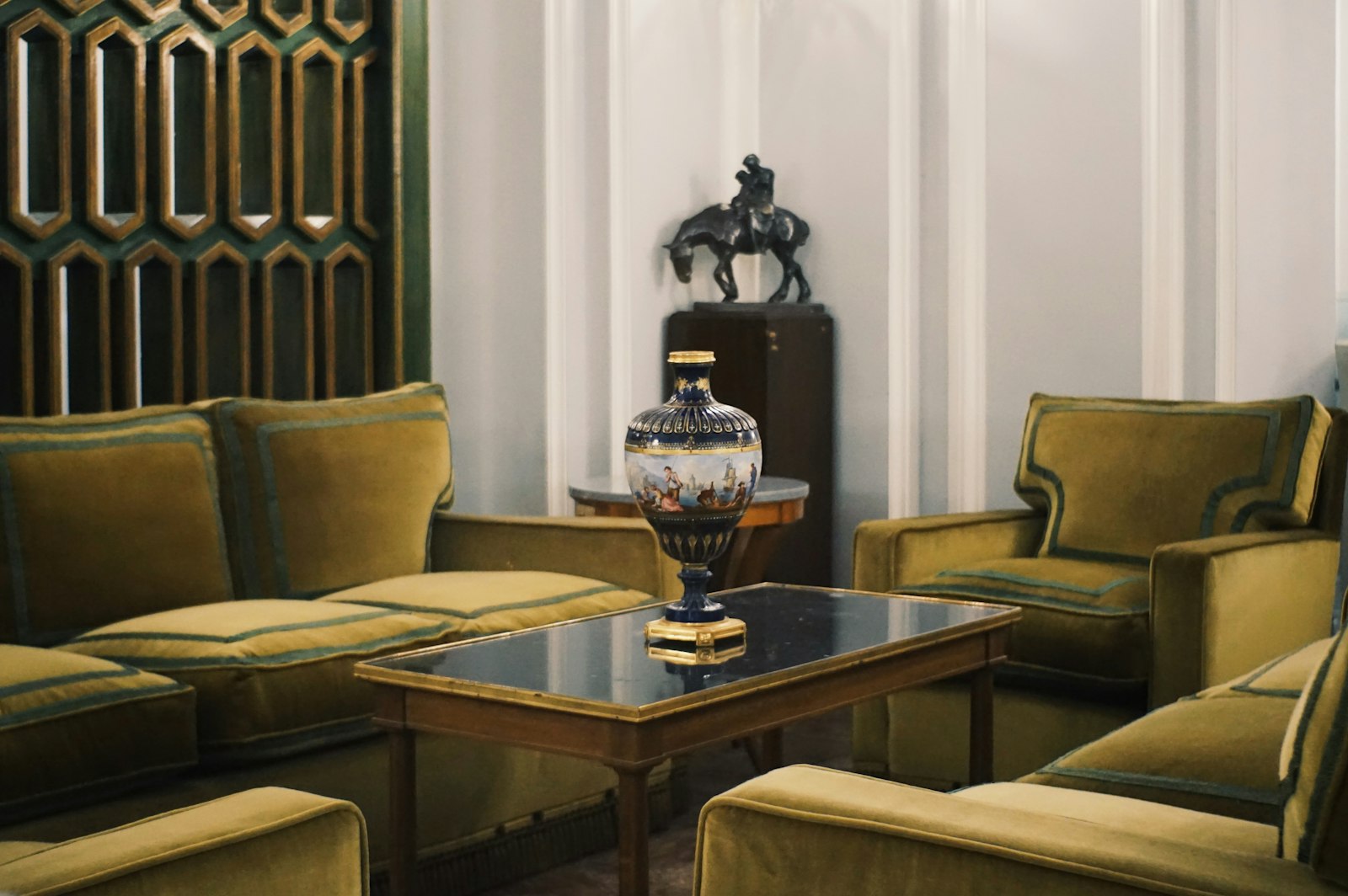
Art Deco interior design is the glamorous 1920s–30s style defined by bold geometric patterns, symmetry, rich materials (brass, marble, lacquer), and dramatic palettes. It blends well with modern interiors when used with restraint.
The History of Art Deco
Named after the 1925 Paris Exposition Internationale des Arts Décoratifs. Golden age 1920s–30s: ocean liners, skyscrapers, Tutankhamun discovery (1922). Chrysler Building (1930) is its iconic monument; Empire State Building carries Deco details. Revivals in the 1960s and 1980s. To explore the movement’s original objects and influence, browse the V&A Museum collection.
Defining Characteristics
Geometric Patterns and Symmetry
Zigzags, chevrons, sunbursts, stepped forms, fan shapes. Symmetrical deliberate layouts.
Rich, Luxurious Materials
Brass, chrome, lacquered wood, mirrored surfaces, marble, glass, velvet, silk.

Bold Color Palettes
Black/white/cream + jewel tones (emerald, sapphire, ruby, purple) + metallic gold/silver/bronze.
Statement Lighting
Tiered chandeliers, frosted-glass globes, etched sconces, fan-shaped wall lights.

Streamlined, Sculptural Furniture
Curved armchairs, barrel-back chairs, waterfall consoles, velvet/leather upholstery. For more inspiration, explore these living room decor ideas.
Art Deco is often confused with two neighboring styles. This quick comparison clears it up:
| Style | Era & lines | Palette & materials | In one line |
|---|---|---|---|
| Art Deco | 1920s–30s · Bold geometry, strict symmetry | Black, white, jewel tones · brass, chrome, lacquer, mirror, marble | Glamour through geometry and shine |
| Art Nouveau | 1890s–1910s · Flowing organic curves, asymmetry | Muted greens, lilac, browns · stained glass, wrought iron, carved wood | Nature and craft, not machine-age shine |
| Hollywood Regency | 1930s–50s · Deco pushed to maximalist excess | Black & white, jewel tones, hot pink · mirrored furniture, lacquer | Deco’s flashier, more theatrical descendant |
Art Deco Room by Room
Living Room
Symmetrical arrangement; velvet sofa (emerald/navy), mirrored coffee table, brass lamps, geometric rug.
Bedroom
Channeled velvet headboard, mirrored nightstands, matching lamps, fan-motif accent wall.
Dining Room
Lacquered table, tiered chandelier, mirrored bar cart, deep green/navy wall, large mirror. Planning a bigger refresh? Don’t miss these kitchen design ideas.
Kitchen
Checkerboard/fan-pattern tile, brass faucets, fluted glass fronts, geometric backsplash.
Bathroom
Black-and-white tile, chrome fixtures, round/arched mirror, frosted sconces.
Entryway and Home Office
Console with geometric inlay, sunburst mirror, bold fixture; lacquered desk, velvet chair. For broader looks, browse these modern home inspiration ideas.
How to Bring Art Deco Into a Modern Home
- Start with lighting and mirrors.
- Add metallic accents.
- One patterned moment.
- One hero piece.
- Disciplined palette.
- Respect symmetry.
New to the vocabulary of decor? Start with our interior design styles guide.
Editor’s tip: Deco’s boldest pieces read best against quiet backgrounds. If your hero piece is a mirrored console or a tiered chandelier, keep surrounding walls and upholstery calm and neutral — restraint is what makes the glamour feel intentional rather than overwhelming.
Key Takeaways
- 1920s–30s style: geometry, symmetry, rich materials, bold color.
- Named after 1925 Paris exposition; Chrysler Building is its icon.
- Signatures: sunburst/chevron motifs, brass/chrome, lacquer/mirror, velvet, jewel tones, statement lighting.
- Works room by room; use as accent language in modern homes.
Frequently Asked Questions
What is Art Deco interior design?
1920s–30s decorative style: bold geometry, symmetry, luxurious materials, dramatic palettes.
What colors are used in Art Deco interiors?
Black/white/cream + emerald, sapphire, ruby, deep purple + gold/silver/bronze.
How can I add Art Deco without a full remodel?
Sunburst mirror, geometric rug, brass accents, statement light fixture, one hero furniture piece.
Is Art Deco the same as Art Nouveau?
No — Art Nouveau = flowing organic curves (late 1800s); Art Deco = bold geometry (1920s–30s).
What is the difference between Art Deco and Hollywood Regency?
Hollywood Regency (1930s–50s) is Deco’s flashier, more maximalist descendant.
Is Art Deco still popular?
Yes — considered timeless; core elements remain fixtures of contemporary interiors.
Sources
- Victoria and Albert Museum — An introduction to Art Deco
- Encyclopaedia Britannica — Art Deco
- Wikipedia — Art Deco

1 Comment
Pingback: Interior Design Styles: 12 Popular Styles Explained